
Searching Millard County Civil Dockets
Utah Courts Xchange is the remote option for Millard County district and justice case history. Expect account or payment steps for remote use. Free terminals at the courthouses and the Utah State Law Library work too. For old files outside electronic coverage, missing images, or certified copies, ask the clerk. The clerk can process a specific court-record request.
An exact case number works best. Pair it with Millard County or the court's name. Put a company in the last-name/company field, and match party spellings to the caption. Add case type or a filing range only when you know them. Broad results cap at 500. Tighter scope keeps a real match from being crowded out.
- Select District Court for general civil matters or Justice Court for small claims.
- Enter the exact case number and court location, or the filed party or company name.
- Narrow with Millard County, a court, case type, or reliable date range.
- Confirm the caption, roles, filing date, and court before opening history.
- Read the whole chronology, then request an exact public order or certified copy if needed.
Millard Civil Search Controls
Each civil search field does its own job. Jurisdiction splits Fourth District Court cases from justice court small claims. The case-type list opens categories; it is not legal advice. Four date panels filter filings, case disposition, judgment, or judgment disposition. Treat those dates as distinct.
| Field | Civil use | Common mistake |
|---|---|---|
| Jurisdiction | District first; Justice for small claims | Searching only one court when venue is unclear |
| Case number | Best identifier when paired with location | Treating it as unique statewide |
| Party or company | Use the filed caption spelling | Using an informal name |
| Case type | Narrow with official Xchange codes | Reading a type as a judgment |
| Date range | Target filing or result dates | Mixing filing and judgment dates |
Note: A missing result can come from scope, spelling, coverage, privacy, or a case that has not yet reached the selected court.
Inside a Millard Civil Docket
A Millard County civil docket entry can show the caption, case number and type, filing date, party roles, counsel, the chronological proceedings, public orders, settings, judgment, accounting, and document links. Party roles matter. Plaintiff, defendant, petitioner, or respondent tells you who did what. One dismissal code or money field rarely ends the story, because a later order can reopen, satisfy, vacate, or change an earlier entry.
| Case Number | A court identifier such as 26XXXXXXXX; pair it with court location. |
|---|---|
| Caption and Parties | The filed title and roles such as PLA, DEF, PET, or RES. |
| Filings and Orders | Chronological entries and links to public images where available. |
| Settings | Hearing date, judge, courtroom, or remote indicator when public. |
| Judgment | Result, date, amount where relevant, and later satisfaction or vacatur. |
Millard Civil Docket eFiling
Utah District Court eFiling is the filing route for approved electronic filing service providers. It is not the public research system. Lawyers and authorized filers send civil documents through eFiling. Public readers look for case history and images in Xchange instead. Mixing them up can strand a nonfiling user. That login answers no docket question. The official District Court eFiling portal makes the login role clear.
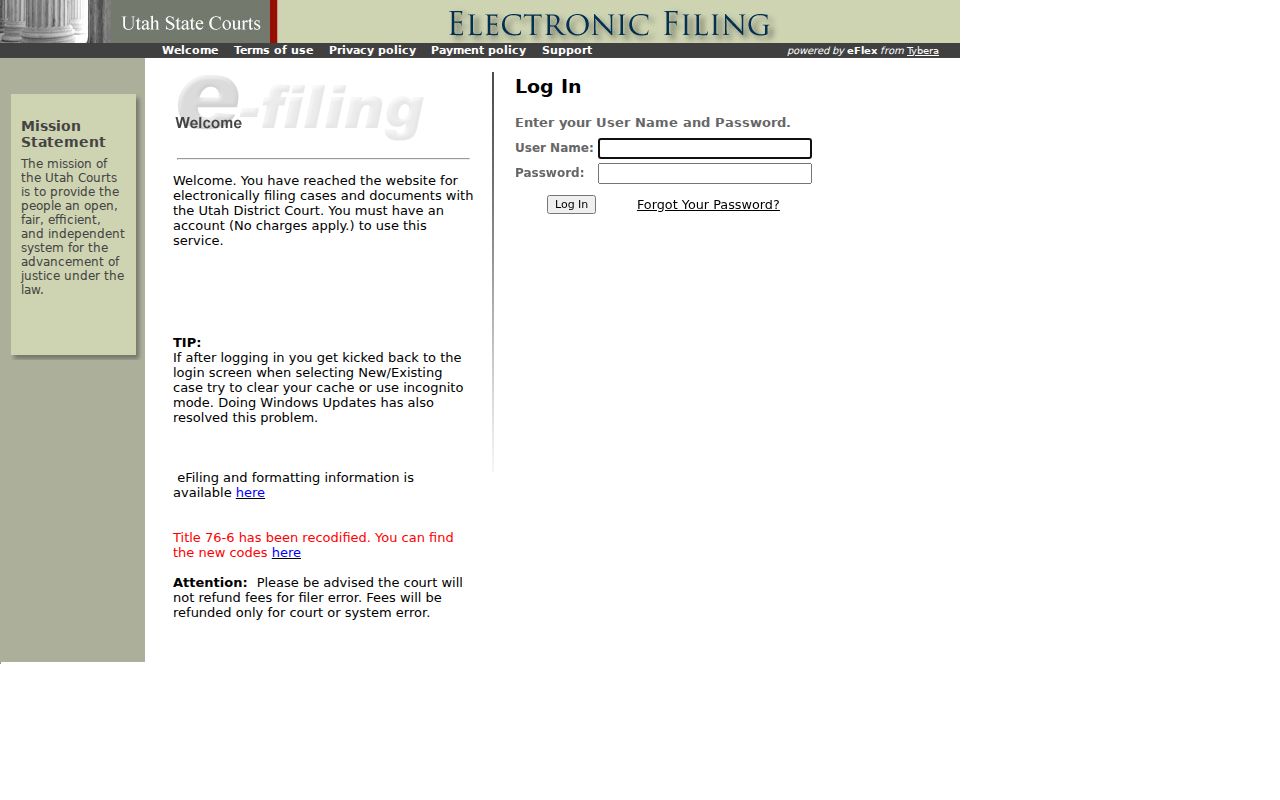
The official page draws the line between filing and access. Filing a document does not make its contents public or instantly visible online.
Civil Case Types on the Docket
Fourth District Court holds general civil jurisdiction in Millard County. Xchange classifications cover contracts, debt collection, automobile tort, intentional tort, premises liability, malpractice, property rights, liens, and mortgage foreclosure. Probate and domestic cases are district work too. Family, guardianship, protective, and similar records can carry private components. The justice courts keep the narrower small-claims docket.
- Contract and debt collection disputes
- Automobile and other tort claims
- Property rights, lien, and foreclosure matters
- Probate and eligible domestic proceedings
- Justice court small claims
Treat the official code as a search aid only. The caption, the complaint or petition where public, the court orders, and the judgment show what actually happened.
Millard Civil Small Claims
The current Millard County Small Claims page says justice court can hear a claim. The defendant must live in Millard County, or the claim arose there. Matters inside Delta city limits go to Delta City Justice Court instead. State small-claims materials list Delta City, Fillmore City, and Millard County Justice Courts. Check venue before you file.
The monetary limit conflicts across official pages. The current small-claims page says $20,000, the general Justice Court page says $15,000, and an older Xchange case-code note says $10,000. None is final without current court confirmation. The county also describes an Online Dispute Resolution pilot effective March 17, 2022. Call the chosen court and use the current form version before submitting a claim.
Verify before filing: confirm the court, current claim limit, venue, ODR steps, and forms directly with the justice court.
Civil Docket Settings and Hearings
A civil setting can mark a motion hearing, a scheduling event, trial, or judgment review. Some entries cover other proceedings. The docket records what was set. It may later show a continuance, order, or revised date. A calendar lists events, while the case history is the broader chronology. A missing calendar row proves neither dismissal nor judgment.
Compare the latest court notice with the official Utah calendar and the Xchange proceedings. If they differ, contact the correct Millard County clerk. Ask for the current public setting. No public button moves a hearing. A continuance takes effect only through the court's allowed process and approval.
Millard Civil Party Access
MyCourtCase is a separate free service for a party in an eligible Utah case. It requires identity and case matching, then can provide notices or electronic document functions for that party alone. It is not a public person-search tool. Public users rely on Xchange, terminals, and clerk requests. The official MyCourtCase page shows the party-only account path.
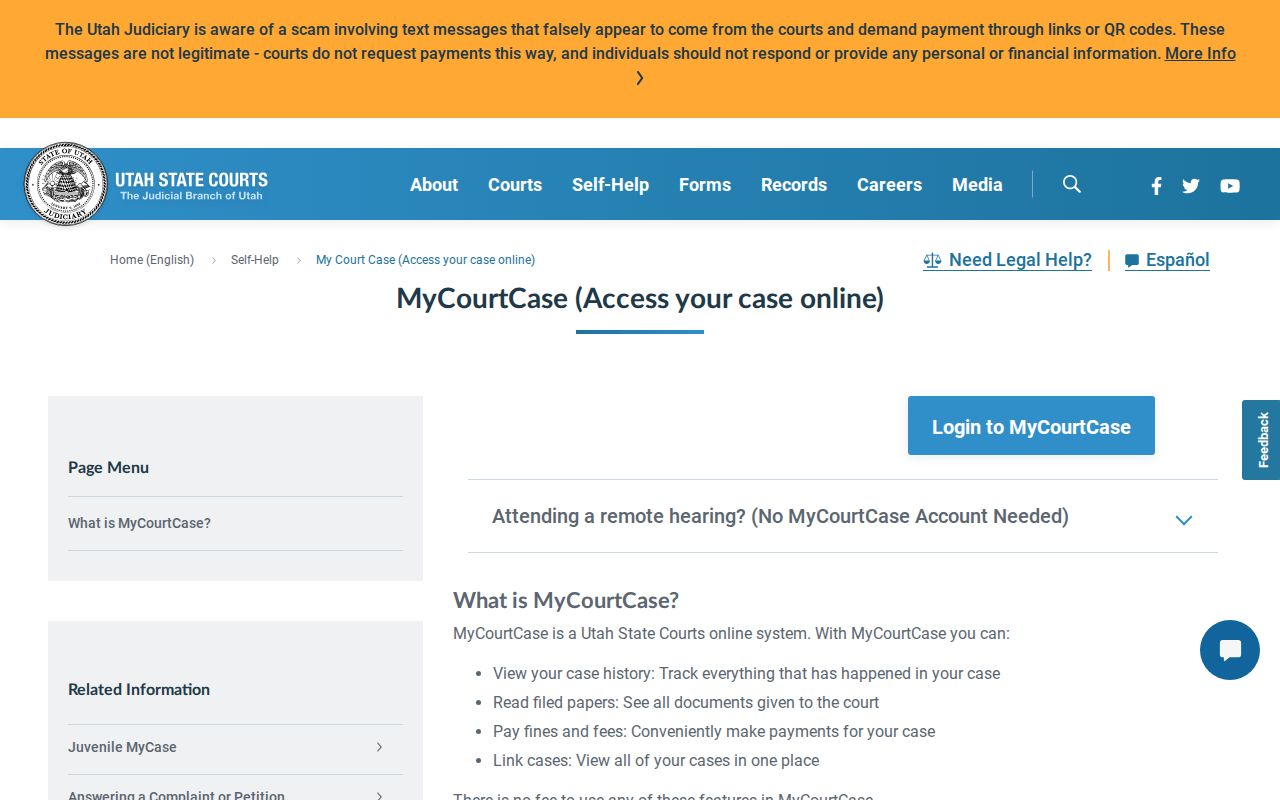
The official page explains why a party sees options and notices that never appear in the ordinary public case history.
Millard Civil Docket Copies
Xchange opens document images for district court filings back to July 1, 2010. Not every attachment gets scanned or released. Each document action runs $1, whatever the page count. You get an electronic image if one is available. Certification is not part of the deal.
Need something certified, old, or missing from the online system? The Utah court-record request process covers those. Name Millard County, the court, the case number, caption, record type, dates, and how you want delivery. Ten business days is the usual response target, and completion within that window is never promised. Staff research, redaction, copying, mailing, and certification can stretch both the clock and the cost.
Civil Docket Access Rules
Utah court rules treat access as the default. Some information still earns a private, protected, or sealed label. A Millard County civil docket might show the hearing, order, judgment, or letters of appointment. A pleading or personal identifier can stay off screen. Domestic, custody, guardianship, conservatorship, protective, and stalking cases often mix public and private parts. Seeing an event on the docket guarantees nothing. The document behind it may stay closed to you.
Key Rules:
UCJA Rule 4-202.02 classifies court records and states the public-access presumption.
UCJA Rule 4-202.03 governs public access and restricted records.
UCJA Rule 4-202.09 governs reasonably specific requests for certified copies.
GRAMA governs government records, but it does not override the Utah Judiciary's own court-record rules. Some data stays protected no matter what. Account details, birth dates, full addresses, minor names, and similar identifiers should never travel from a case file into a public summary.
Millard Civil Case Categories
A Millard County civil docket sorts cases into broad classes. The full event trail stays with each one. Contract and debt matters usually produce a complaint, answer, motion, order, and judgment. Tort cases can layer on service, scheduling, expert, trial, or settlement entries. This applies only where those entries are public. Property and lien disputes tend to hinge on recorded orders or judgments. Probate, domestic, and protective cases may list a public event. The paper behind it can stay private.
Small claims ride the justice court track with simpler steps. Yet they remain civil court cases. The court level shapes venue, filing forms, and available processes. It also decides where you run the docket search for your case. An Xchange case-type code is only the opening label. It cannot settle liability, the legal basis for relief, or the outcome. Those answers live in the chronology and the controlling orders, not the code.
Millard Civil Dismissal Codes
Utah's disposition list splits out a plain dismissal, dismissal with prejudice, dismissal without prejudice, voluntary dismissal, summary judgment, stipulated judgment, satisfaction, reopening, and vacatur. These codes are not interchangeable. Dismissal without prejudice leaves the door open; with prejudice slams it shut. A satisfaction speaks to an entered obligation being paid, not to whether the claim was ever valid. Vacated means an earlier result got set aside.
On a Millard County civil docket, read the short code. Match it to the full event text and date. Then watch for what follows. A judgment might bring an appeal, satisfaction, correction, or another order behind it. Accounting entries can show an amount, a payment, or a balance, but the judge's order controls what was actually awarded. When the public summary confuses you, request the specific public judgment. Do not guess from a code.