
Getting Millard County Court Records
Start by figuring out which Millard County court holds the file you need. The Fourth District Court has its own listing in the county court directory. So do the East and West Justice Courtrooms. Each has its own clerk. The district clerk keeps felony, class A misdemeanor, general civil, probate, domestic, and district appeal files. Justice Court clerks handle county and city traffic matters. So do infractions, class B and C misdemeanors, and small claims. Anything juvenile goes to the Fourth District Juvenile Court office. Those files carry tighter access limits than the rest of the docket.
For a quick check of case history, Utah Courts Xchange is the fastest route. Parties with supported personal cases can use MyCourtCase instead. Anyone else can visit a courthouse terminal or pay for remote Xchange access. The clerk counter can route you and quote fees over the phone. A formal request uses the state's written form. Mail it in, or use the listed audio email channel when the form permits. For county administrative records, use a county GRAMA request. That path does not cover pleadings, orders, docket entries, or court audio.
- Identify the court, location, parties, and case number.
- Search Xchange or inspect the public record at an available terminal.
- Call the correct clerk to confirm custody, format, and estimated fees.
- Submit the written court-record form for copies, certification, or restricted-access review.
- Pay the quoted charge and use the delivery method approved by the clerk.
Millard Court Record Request Fields
Utah Courts asks for reasonable specificity on its request form. Give staff enough detail to find the item without guessing. Name the Millard County court and location. Give the case number, the party caption, the type of document, and a helpful date range. Pick inspection or copies, and expect fees. The form also wants your name, mailing address, daytime phone, date, and signature.
Other sections of the form cover fee waivers, nonpublic access, and expedited handling. Nonpublic material asks for an explanation of your basis. Support the explanation with papers when the rules demand them. Expedited treatment turns on public or media benefit. A personal deadline usually will not cut it. Plan on a response within ten business days. That clock is a target for answering, and it is not a promise that every Millard County court record will be in your hands by then.
The official request page lays out the filing route and the fee framework.
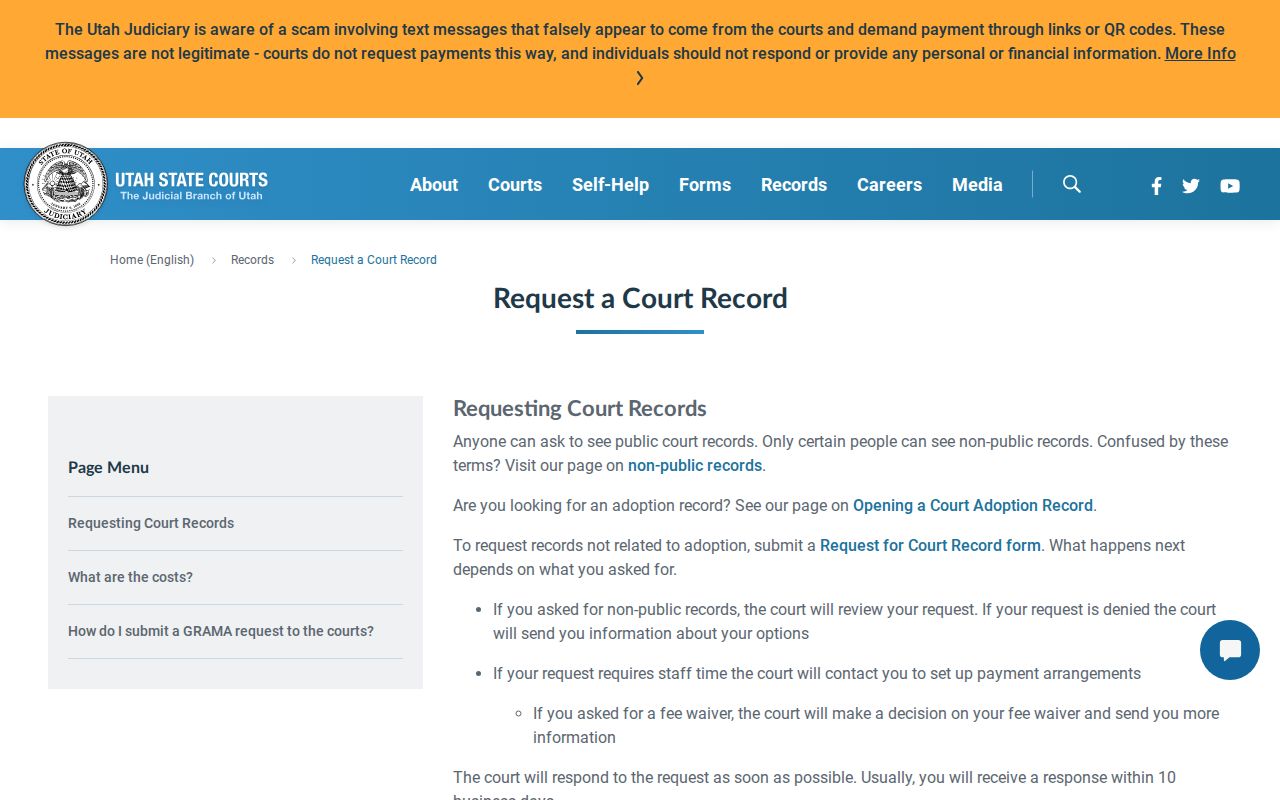
When an Xchange summary leaves questions open, this state process is the direct channel for judicial records.
Court Record Types
A Millard County court record comes in more than one form. Some are simple summaries. Others are full documents that parties file, and a few are separate media products. Xchange, the state's system, labels the event list a case history or extended case history.
Not everything is online, though. Public document images are a different story. Ones filed since July 1, 2010 may be sold through Xchange when available. Older material and paper that was never digitized may require clerk review instead. Keep one caution in mind. Part of a Millard County case file may be available, but that does not mean every part of it is public.
- Case histories and chronological proceedings
- Pleadings, motions, and other public filed papers
- Signed orders, judgments, and disposition entries
- Public accounting and payment entries where displayed
- Certified, exemplified, transcript, and audio products ordered separately
Know what you are asking for before you request anything. A docket printout only lists the entries in a Millard County case. The full case file holds the actual papers. Neither one is a certified order or recording. Say a document contains protected information. Name the exact item you want, and ask the clerk whether a public, severable copy can be supplied.
Millard Court Record Custodians
Millard County splits its clerk duties, and the split matters. Marki Rowley is publicly listed as Millard County Clerk. She also serves as the Fourth District Court clerk/manager contact. Her district window is where district filings and copies begin. Justice Court runs its own clerical operation. Its offices sit in Fillmore and Delta. A citation, small claim, or lower-level misdemeanor belongs at the court location printed on the notice. Do not default to whichever office is closest.
Fourth District Court Clerk
765 S. Hwy 99, Suite 6
Fillmore, UT 84631
435-743-6223
Millard County Justice Court
East: 765 S. Hwy 99, Suite 2, Fillmore
West: 71 S. 200 W., Delta
435-743-6952 or 435-864-1403
Juvenile cases follow a different track. Delinquency and child-welfare records sit with the juvenile clerk in Fillmore, and they never appear in the ordinary public Xchange records. The clerk decides whether a requester has a permitted basis for access.
Inside a Millard County Court Record
The fields inside a Millard County court record matter. A case number is assigned by the court. It may not be unique across Utah. The court and the Millard location still matter, so include both in any case lookup. Proceedings list hearings, filings, and administrative events in date order. The caption names the parties, and short party codes mark each person's role. Later entries may show a judgment or disposition. The signed order itself controls the legal effect.
| Case number | A court and location-based identifier used to retrieve the Millard County file. |
|---|---|
| Caption and parties | The case title plus roles such as plaintiff, defendant, petitioner, or respondent. |
| Proceedings | Dated hearings, filings, orders, and administrative entries in the case history. |
| Documents | Public pleadings and orders available as images or by clerk request. |
| Judgment or disposition | The result or status entry, read with later events and the signed order. |
Short codes on a Millard County court docket can mislead if you read them alone. "Dismissed" comes in more than one form, and "satisfied" speaks only to an obligation the judge already entered, not to the full case history. The official Utah code list explains what each entry means, so pair it with the event date, the case type, and any later Millard County court records before you draw a conclusion.
Millard Court Audio Requests
Court audio takes a separate form in Millard County. The Fourth District Audio Request asks who was involved, where the hearing happened, and which judge or commissioner presided. You supply the county and location. Party names, case number, hearing date and time, and courtroom go on the form too. Contact details for the requester go on the form too. Delivery options range from an FTR link to MP3, electronic media, mail, or pickup. FTR is simply the court's digital recording system.
Costs follow the format. The form lists a $15 charge per half-day for an FTR link, MP3, or electronic media. That price comes before any added staff or delivery costs. Expect processing within ten business days after payment. Refunds are not offered, and physical records left unclaimed may be destroyed after 30 days. Attorneys of record file through eFile. Anyone without counsel uses recordingrequest4th@utcourts.gov. Note that a case-history screen never substitutes for this audio request.
Note: Giving the exact hearing date and courtroom helps staff pull the right Millard County recording. It also trims avoidable research charges.
Fees and Certified Copies
A document image pulled from Xchange is not certified. Certification means the clerk authenticates a specific record. Exemplification is a different formal copy, billed separately. Under UCJA Rule 4-202.09, you have a right to inspect, reasonable identification is required, and payment must clear before the clerk issues a certified copy. Before ordering, ask whether the receiving person or agency needs a certified judgment, decree, order, case history, transcript, or exemplified copy.
| Millard County record item | Published charge |
|---|---|
| Ordinary paper copy | $0.25 per sheet |
| Certified copy | $4 per document plus $0.50 per page |
| Exemplified copy | $6 per document plus $0.50 per page |
| Electronic storage medium | $15 per unit |
| Fax or email | $5 up to 10 pages, then $0.50 per added page |
| FTR cloud audio | $10 per recording under the fee rule |
Staff labor can raise the bill. The first 15 minutes cost nothing. After that, published hourly rates vary by who does the work, from clerk time up to technical or managerial tasks. For a large Millard County court record order, request an estimate first.
Millard Court Record Fee Check
Statewide fees shift often, and the medium you choose changes the math. The official Utah Courts fee page posts the current general reference for any Millard County record request.
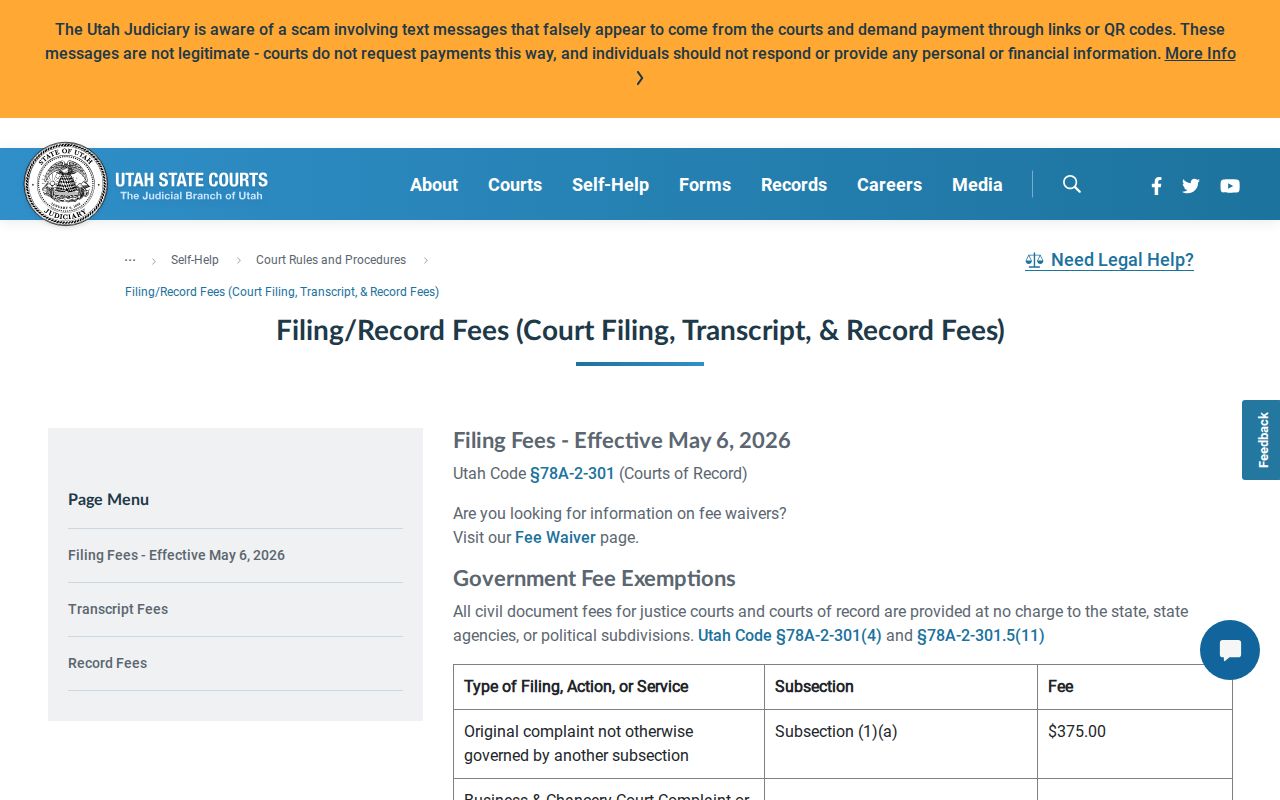
Get the clerk's estimate before you commit. Retrieval, redaction, mailing, certification, or media work can move the total.
Xchange prices itself apart from the clerk. The current subscription page lists a $10 initial amount for a one-time user. After that come $0.35 per search and $1 per document. Subscribing carries a $25 setup fee plus a $40 monthly charge for 500 searches. Rule 4-202.08 sets out a $10 transaction covering up to ten non-subscription searches. An older screen showed a different figure, though. Keep those numbers separate rather than mixing them. Confirm the live checkout amount before you charge anything to an account.
Millard Court Record Access Channels
Remote Xchange works well for a public summary and open document images. Other channels exist. Free courthouse terminals may be available, and the Utah State Law Library offers research computers. Terminal coverage generally reaches back to the late 1990s. Call ahead to confirm a working terminal and local printing. The law library caps a session at 30 minutes when others wait. Prints there cost 20 cents each.
A phone call also helps you reach the right clerk. It can reveal whether a record sits in paper or electronic form. The written request remains the formal copy path. Mail can carry a completed request where permitted. Email is expressly documented for Fourth District audio. MyCourtCase is a free party portal built on identity and case matching. It is not a general public search. Xchange caps results at 500, so filters for court, county, date, and case type really matter.
Blank search result: A missing row can reflect an older conversion record, wrong court location, restricted record, bad search terms, or technical trouble. It does not prove that no Millard County record exists.
The official written-request rule shown here supplies the specificity and entitlement framework.
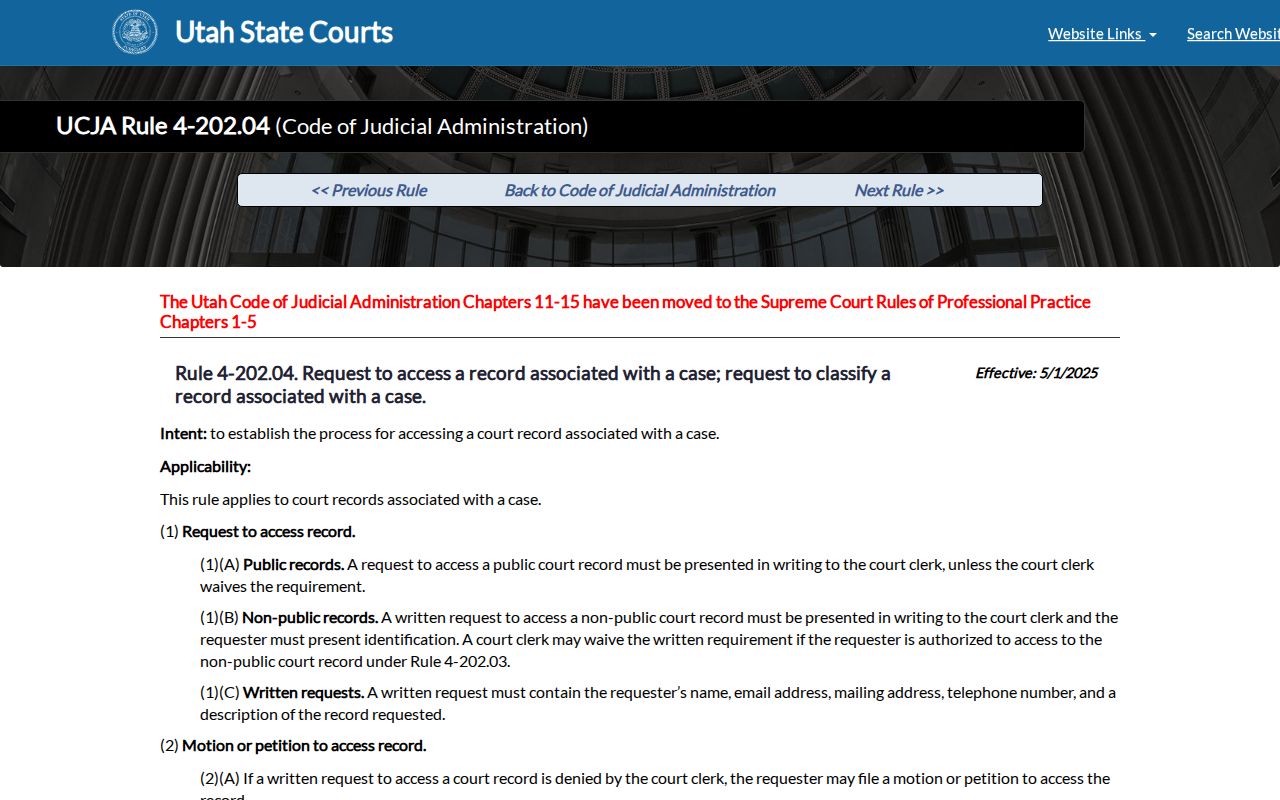
That rule backs the formal request when other tools fall short. If a clerk search, public terminal, or Xchange result fails to produce the copy you need, put the request in writing.
Redacted Millard County Court Records
Redaction, privacy rules, and sealing are three different limits. Redaction strips or masks protected details from an otherwise public copy. Utah rules shield Social Security numbers, driver-license numbers, financial account numbers, dates of birth, minor names, and many nonparty contact details. The filer carries the redaction duty. Court staff may withhold a protected filing. They may release a public version when the confidential portion can be separated.
- Public
- Open for inspection unless a law, rule, or order says otherwise.
- Private
- Visible only to people with a recognized access basis.
- Sealed
- Restricted by rule or court order, with existence potentially absent from public search.
- Expunged
- Sealed through a legal process, not merely removed from one web screen.
Juvenile and child-welfare files are not ordinary public searches. A requester with a lawful basis must go through the juvenile clerk or the form's nonpublic-entitlement process. Utah Courts also posts a plain-language redaction and sealing reference worth reading.
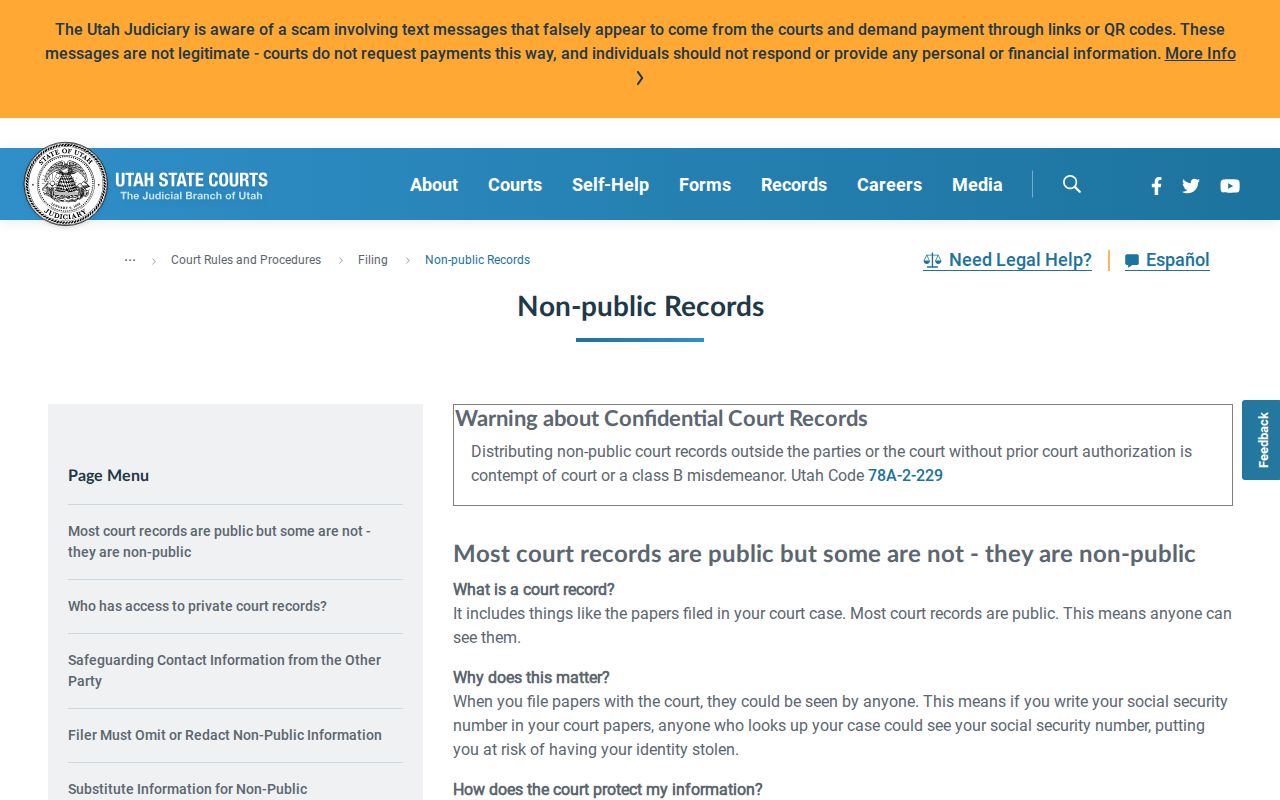
Those distinctions matter here. They explain why a public docket stays visible while a protected filing or identifier does not.
Sealed Records and Public Access
Utah starts from a public-access presumption, then layers the Judiciary's classification rules on top. Rule 4-202.02 sorts material into public, private, and sealed. Rule 4-202.03 governs access, including restricted paths for sealed and expunged records, while Rule 4-202.04 sets the written-request and entitlement process.
Utah court-record rules:
UCJA Rule 4-202.08 sets charges for copies, staff time, transmission, media, and Xchange.
UCJA Rule 4-202.09 governs certified copies and reasonable specificity.
Utah Code Section 63G-2-301 recognizes public records while preserving court-rule restrictions for judicial records.
Millard County keeps a GRAMA page for records held by county offices. A court docket is different. Filings, orders, judgments, transcripts, and hearing audio all live in the Utah Courts system. GRARA-style requests will not reach them.
The official classification rule for court records appears in this publication of the Utah court rules.
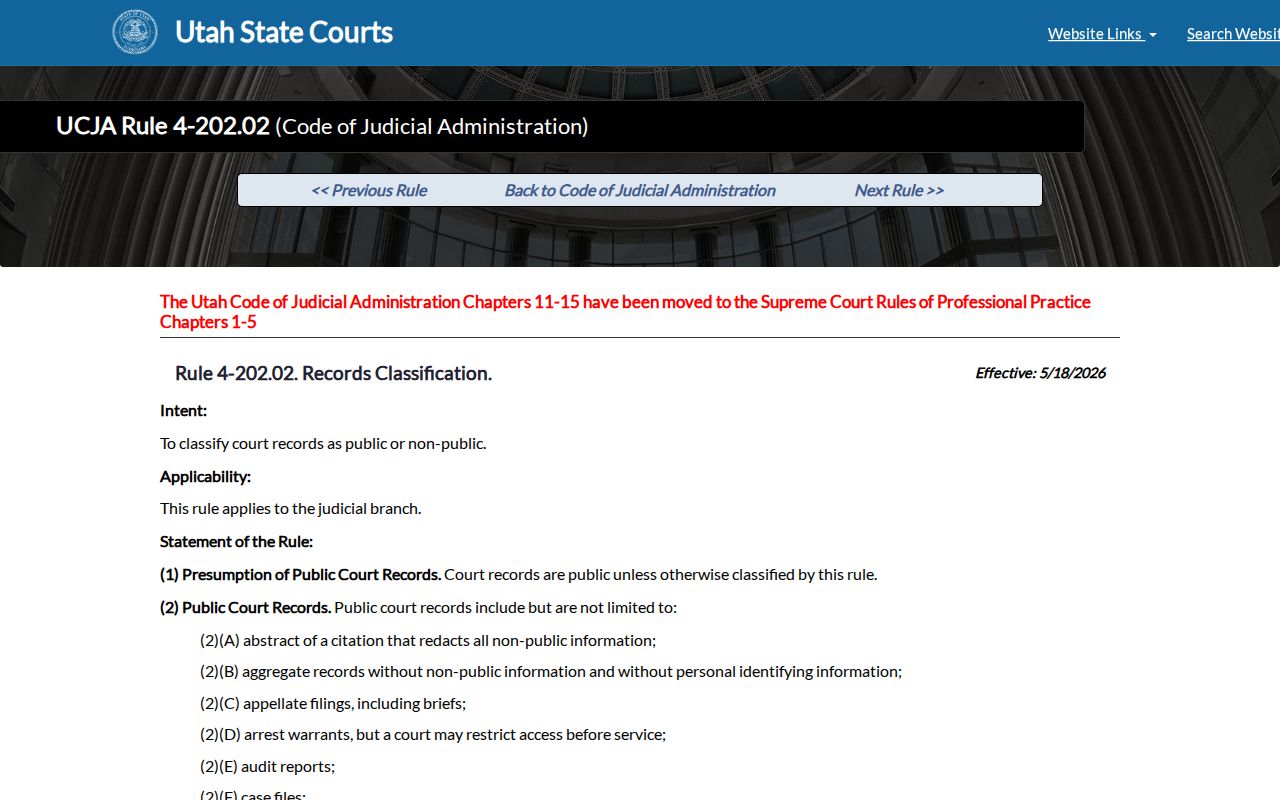
Its public, private, and sealed categories decide what a Millard County requester may inspect or receive.
Verify Millard Court Record Copies
Check the copy against what you asked for. Court, case number, caption, document date, and copy type should all line up. A plain printout can settle a quick question about a filing. A certified copy is the safer route when the record must carry formal weight. Something missing? Ask the clerk whether it predates electronic coverage or sits only in paper. It may have been filed as private. Or it may need its own audio or transcript request.
Hold on to the clerk’s receipt and any certification. New docket entries can shift a case status. So note the date any Millard County court record search was run and treat the results as of that moment. To pin down the case first, the Millard County case lookup covers that step. Use it before you order a precise copy.
The charges and staff-time terms come straight from Utah’s official court-record fee rule.
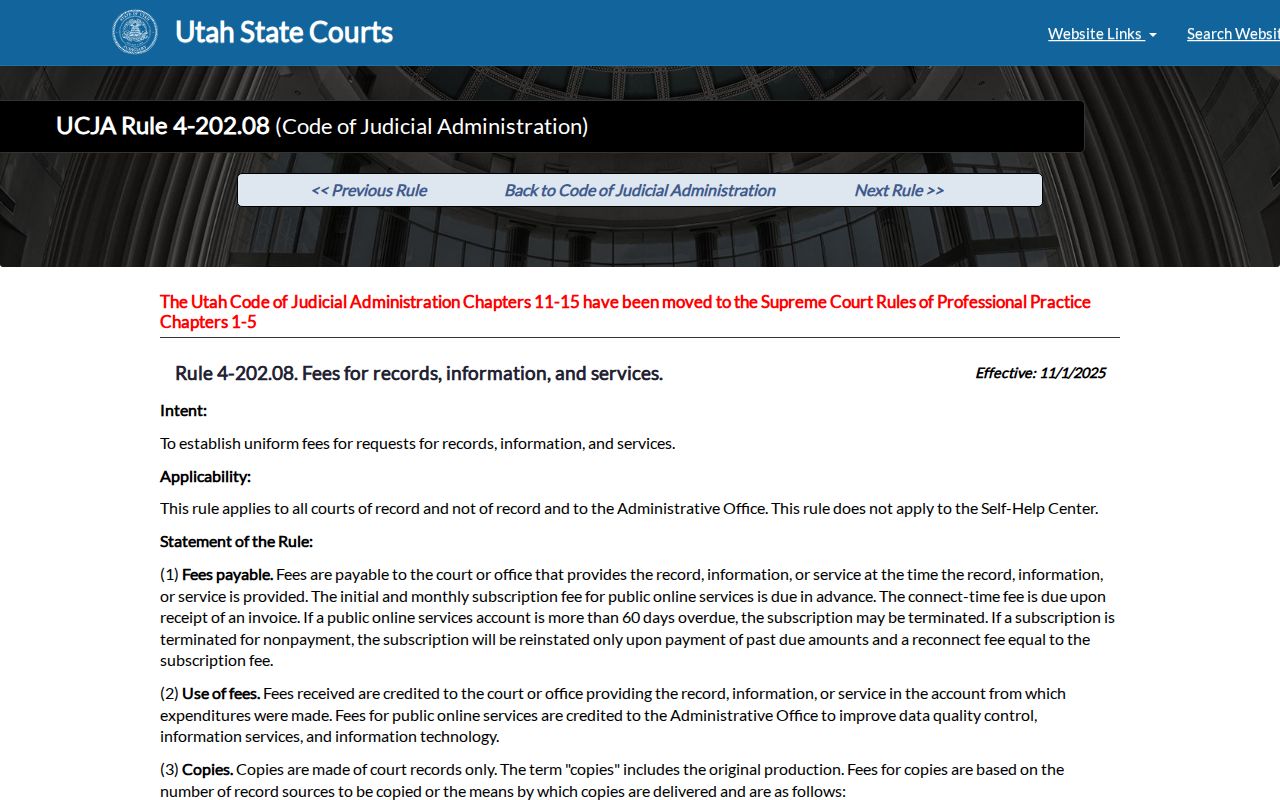
Ask the clerk for a fresh estimate whenever a Millard County records request calls for heavy retrieval, transmission, or technical work, since the rule's fee can shift with the labor involved.